


Poland - October 2018 - Rosario Louro

Warsaw touches us right from the first minute
Monday, October 22, 2018
This week I'm on a work trip to Poland with a group of four bloggers.
We started in Warsaw, where we're staying at the Sofitel Victoria hotel, one of the most emblematic in the Polish capital. In the past, it was Warsaw's showcase, when communist regimes wanted to show that they also had luxury hotels.
The first impression of the city is frankly positive. I didn't come with any preconceived ideas, I only knew that the city had been destroyed during the war and rebuilt. But I didn't imagine such a perfect and monumental reconstruction. The historical area is a true living museum, with replicas of the squares and buildings from the 19th century. Therefore, despite having been rebuilt only 30 or 40 years ago, it was elevated to a World Heritage Site. We're off to a good start!
What does the reconstruction of Warsaw have to do with Canaletto?
Tuesday, October 23, 2018
In June, a fascinating museum opened in Warsaw that tells the story of vodka production in Poland since the 16th century. It's really worth a visit because the museum is completely interactive and has surprising details. For example, when the Germans invaded Poland, the local population poured the equivalent of five Olympic swimming pools of vodka onto the streets of Warsaw to prevent the production from being smuggled into Germany.
The renovated building is a former mega vodka factory, now converted into apartments, shops, restaurants, and museums. Unmissable!
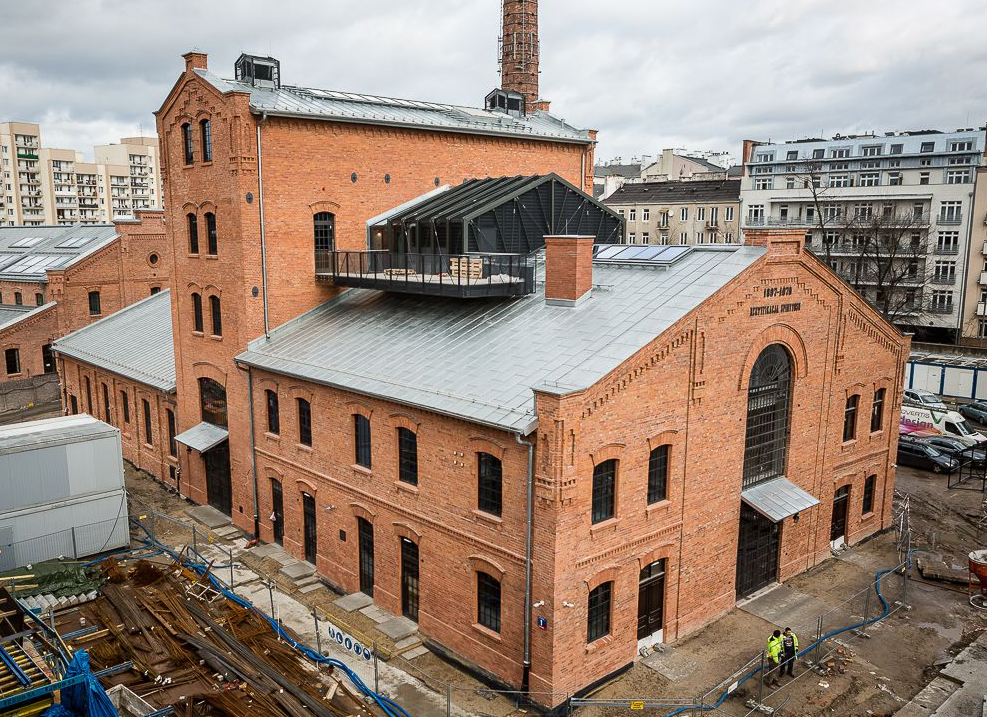
Polish Vodka Museum
At the end of World War II, Warsaw was so devastated that local authorities seriously considered moving the capital elsewhere. Reconstruction seemed unmanageable, and only about 1,000 inhabitants remained in the city. However, in just four months, thousands of people returned to Warsaw in search of their families and belongings. They lived for months on the streets, near the houses they had inhabited, hoping that their relatives would come looking for them. They began cleaning and reconstruction work with the few resources they had and ended up creating an unstoppable movement. The authorities then realized that they would not be able to move the capital elsewhere and decided to join forces to rebuild Warsaw, making it the European capital full of personality and charm that it is today.
One of Warsaw's largest private investments was the reconstruction of the Royal Castle, where the main official ceremonies take place today. This castle was entirely rebuilt with donations from private individuals.
One of the most interesting spaces in the castle is the Canaletto Room, which houses a huge collection of paintings about Warsaw. Much of the old city was reconstructed based on the historical memory inherited through Canaletto's paintings.
The Unmissable Warsaw Rising Museum
Wednesday, October 24, 2018
Even if you don't want to, anyone who visits Warsaw inevitably enters the horror of the Second World War. Today I dedicated the morning to the Warsaw Rising Museum, where I learned in detail about the failed attempt by 2,500 Polish resistance soldiers to liberate Warsaw in 1944.
In reality, this "uprising" proved to be a suicidal act that only paved the way for Soviet troops to take control of Poland. I was very impressed by the amount of films and historical documents from that time. How was it possible, in the midst of that chaos, for so many people to film and photograph events live? How was it possible to recover all that material and preserve it to this day?
The museum perfectly reflects the courage of the Polish people and leaves us with a pang of sadness knowing that today, in other parts of the world, equally dramatic situations are unfolding without anyone resolving anything. The mini-tank you see in the photograph was a car bomb, remotely controlled by the German army, used to detonate buildings. Today, these Dinky toys are far more effective missiles. We go from war to war, and the only thing that changes is the sophistication of technological means. Unfortunately, humanity seems unwilling to evolve towards peace.
Krakow is no exception. On the contrary...
Thursday, October 25, 2018
Like Warsaw, Krakow also has a historic center that is a UNESCO World Heritage site. Wawel Castle is one of the city's main landmarks. Built in 1265, it is considered one of the most valuable historical sites in the world.
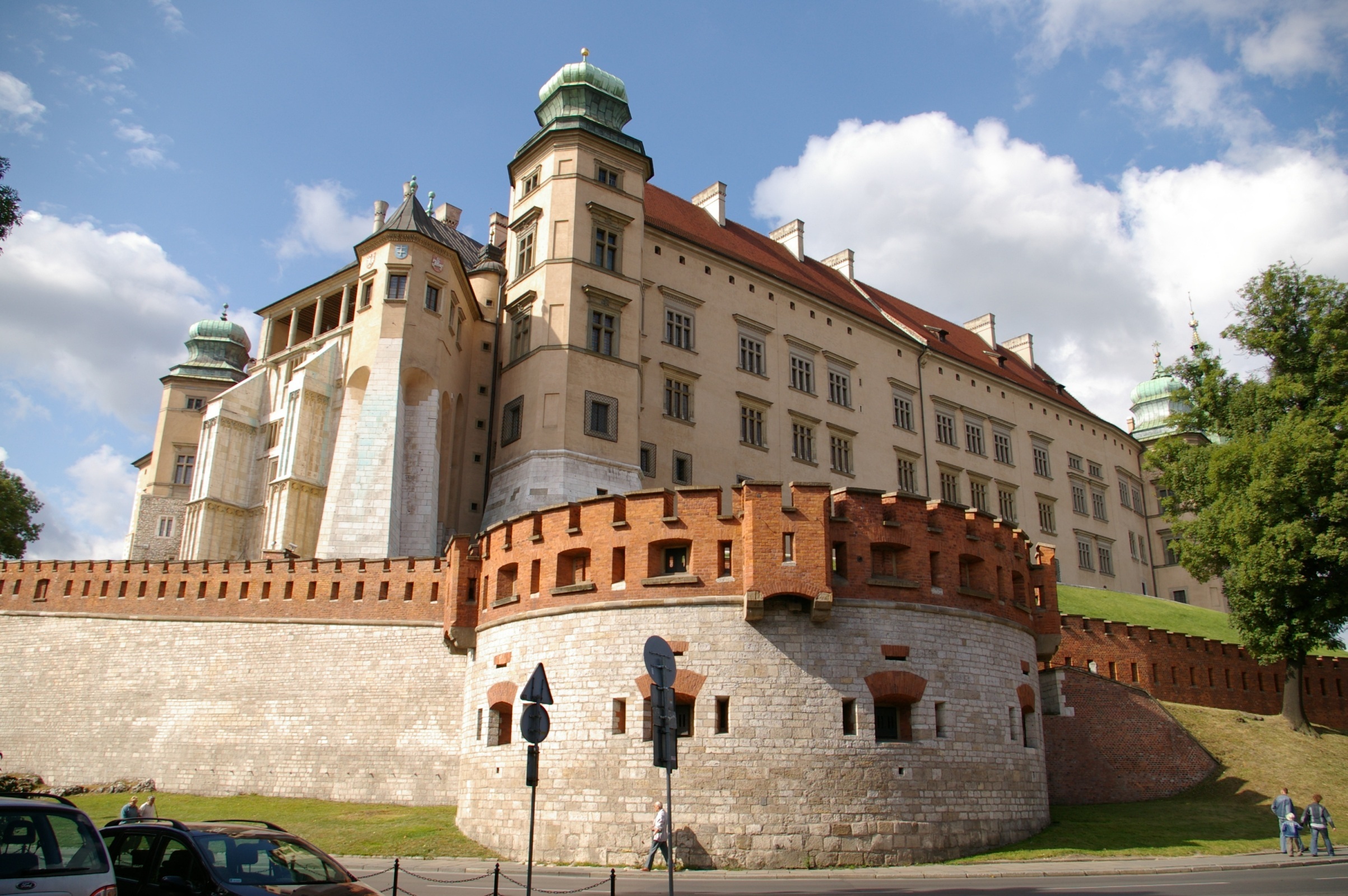
Wawel Royal Castle
One of the museums worth visiting in Krakow is Schindler's Factory. Contrary to what the name suggests, the museum has little to do with Schindler or the factory. It's a journey through life in Krakow before and during the war, and later, during the communist period. Only the museum building is located on the site formerly occupied by the factory, hence the name. In this post, I share a comment written by Roman Polanski when he was eight years old, upon discovering that a wall was being built around the place where he lived with his family. His mother died during the war. His father survived because he was fit to work in concentration camps, and Polanski managed to survive after fleeing the Krakow ghetto and living as a beggar until the end of the war.
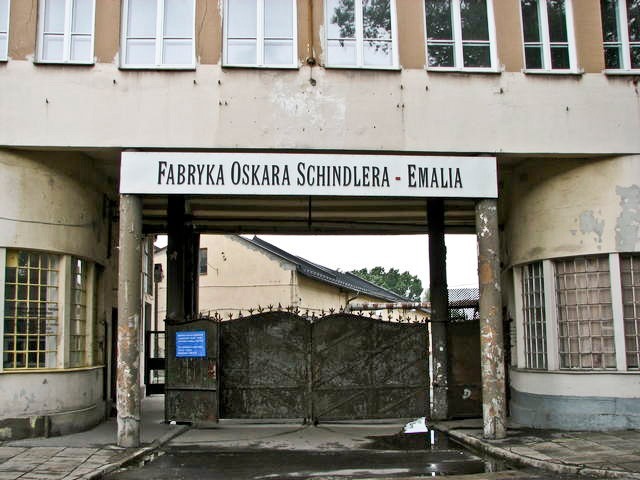
Oskar Schindler's Factory
The Wieliczka Salt Mines are completely inadvisable for anyone with any type of claustrophobia.
Friday, October 26, 2018
About 20 minutes from Krakow, there are some curious salt mines (Wieliczka) that are the second largest tourist attraction in Poland, visited annually by 1.5 million people. I confess that I started this visit without much enthusiasm, but I was surprised by what I found. About 300km of tunnels, rooms, sculptures, ballrooms, restaurants, shops, museums, cinemas, bathrooms and who knows what else, inside a giant salt mine, about 150 meters below ground. In this true underground salt city, weddings, masses, concerts, conferences, private meetings, birthday parties, political meetings... In short, a little bit of everything. Highly discouraged for claustrophobic individuals, but recommended for those in need of a different experience.
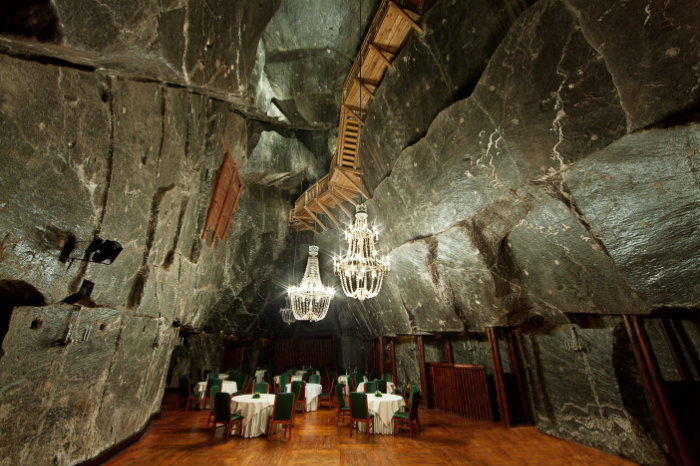
Wieliczka Salt Mines
The True House of Horrors
Sunday, October 28, 2018
The first time I went to Krakow, I didn't want to go to Auschwitz because my intention was to get to know Poland and the Polish people, and I knew Auschwitz would distract me from that goal. I realized immediately on that first visit that it's impossible to know Poland outside the context of the Holocaust.
The marks of war are on every corner, in every conversation, in every glance, even if they aren't visible anywhere. Unlike other European countries, such as Croatia, Spain, or Bosnia, which have had recent wars, in Poland the theme of war clings to us in an indescribable way. And it's not that the Polish people lament! On the contrary, it's clear that they don't harbor hatred from the past and look to the future with hope. It's impossible not to admire that people who were humiliated like no other, first by the Germans and then by the Soviets, and who in 70 years rose from the ashes (literally) with a singular dignity and sense of patriotism.
Last Friday I went to Auschwitz. I can't say I was surprised because I knew what to expect. Perhaps I didn't grasp the scale, but when you step into that place you realize that hell exists not only there, but in many parts of the world, and that perhaps we could do much more than we do.
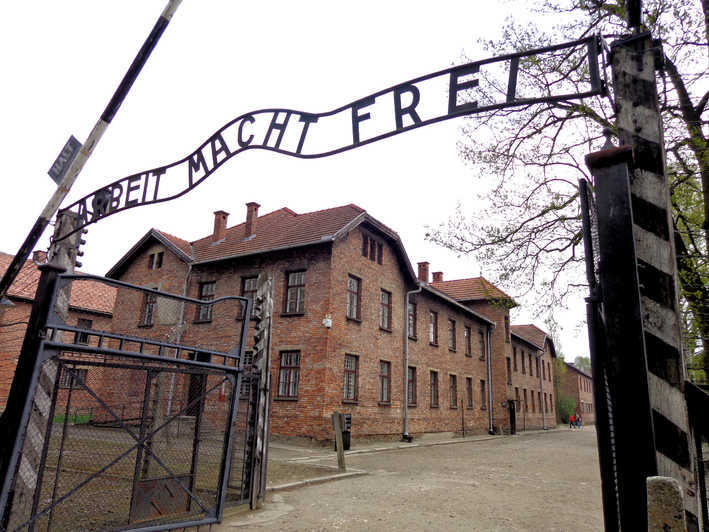
Entrance to Auschwitz
Tomorrow, when I leave for work in the morning, approximately 70 million people will be dying in refugee camps across five continents. Many will die of hunger, others from disease, others will be raped or enslaved. And we say we can't do anything. Can't we? Shouldn't we?
Rosário Louro
 (+351) 213 916 600